
SWOT Analysis Generator
Create a clear SWOT analysis for your business, product, or campaign with guided inputs and smart strategic suggestions.
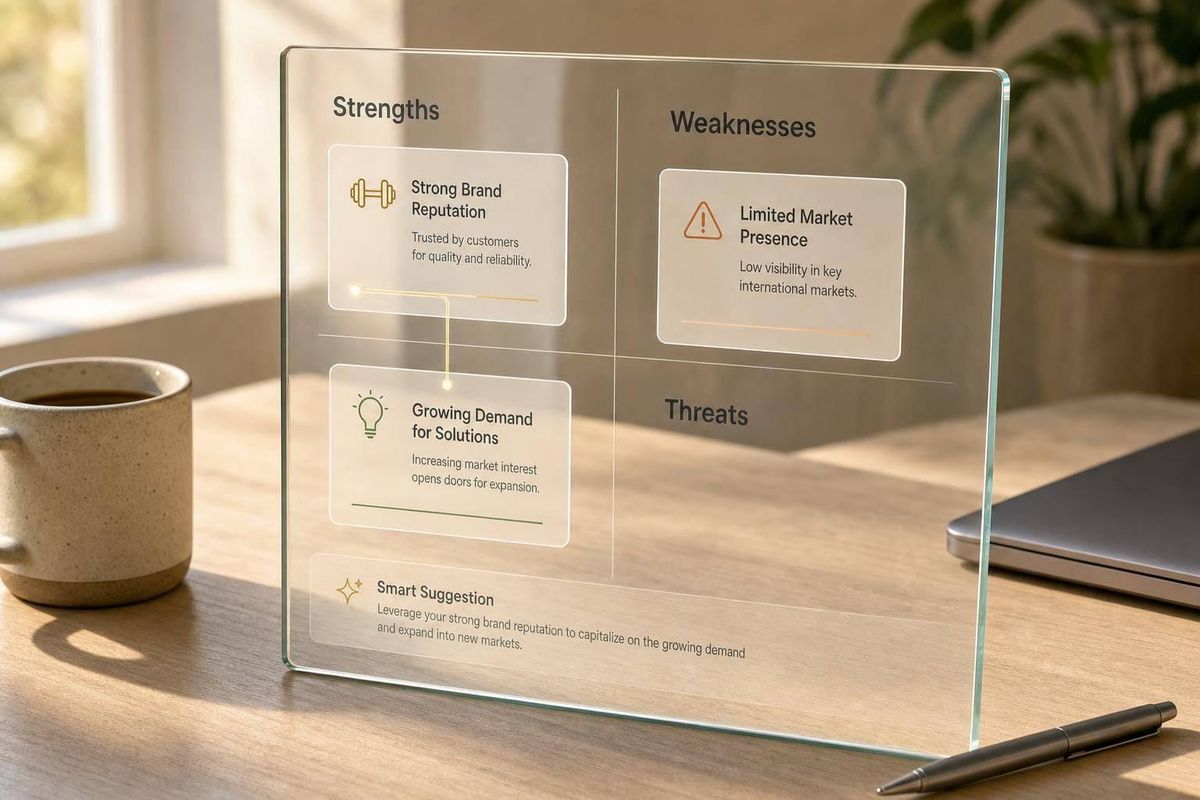
SWOT Analysis Generator for Smarter Planning
A strong strategy usually starts with a clear view of where you stand. This SWOT Analysis Generator helps you map internal strengths and weaknesses alongside external opportunities and threats, so you can make better decisions without overcomplicating the process. Whether you're evaluating a business, product, campaign, or project, the tool turns raw context into a structured planning framework that’s easy to review and act on.
Built for Real-World Strategy
Instead of giving you a blank template and leaving you to figure it out, the tool guides you through key inputs like audience, goals, competitors, and current challenges. It then organizes those details into a focused SWOT analysis, cleaning up duplicate ideas and surfacing practical points where your draft may be thin.
Clear, Actionable Output
A useful SWOT framework should do more than label ideas. It should help you spot your biggest advantage, identify the risk that needs attention, and clarify what to do next. That’s why this tool also adds a short strategic summary and suggested focus areas. If you need a faster, cleaner way to create a SWOT analysis that supports planning, positioning, or review work, this tool gives you a solid place to start.
FAQs
What makes this SWOT Analysis Generator different from a basic template?
A basic template gives you empty boxes. This tool helps you think through what actually belongs in each one. It looks at your business context, separates internal factors from external ones, and turns rough notes into clearer, more actionable points. If you're missing ideas in one area, it can also suggest realistic additions so the final analysis feels balanced rather than forced.
Can I use this for a product launch, campaign, or internal project instead of a business?
Yes. The tool works for businesses, brands, products, projects, and marketing campaigns. The structure stays the same: strengths and weaknesses are internal factors you can influence, while opportunities and threats come from the outside environment. That makes it useful whether you're planning a launch, reviewing a quarter, comparing against competitors, or trying to sharpen strategy before a big decision.
Will the output be generic if I only provide a small amount of information?
It doesn't have to be, but the quality improves with better input. If you only enter the basics, the tool uses your industry, audience, and goal to generate grounded suggestions that fit the situation. If you include competitors, market context, and current challenges, the analysis becomes much more specific. Either way, the goal is to keep each point practical, concise, and useful for real planning.