
Website Audit Checklist
Build a tailored website audit checklist for SEO, UX, speed, content, and conversions—based on your site type, goals, and concerns.
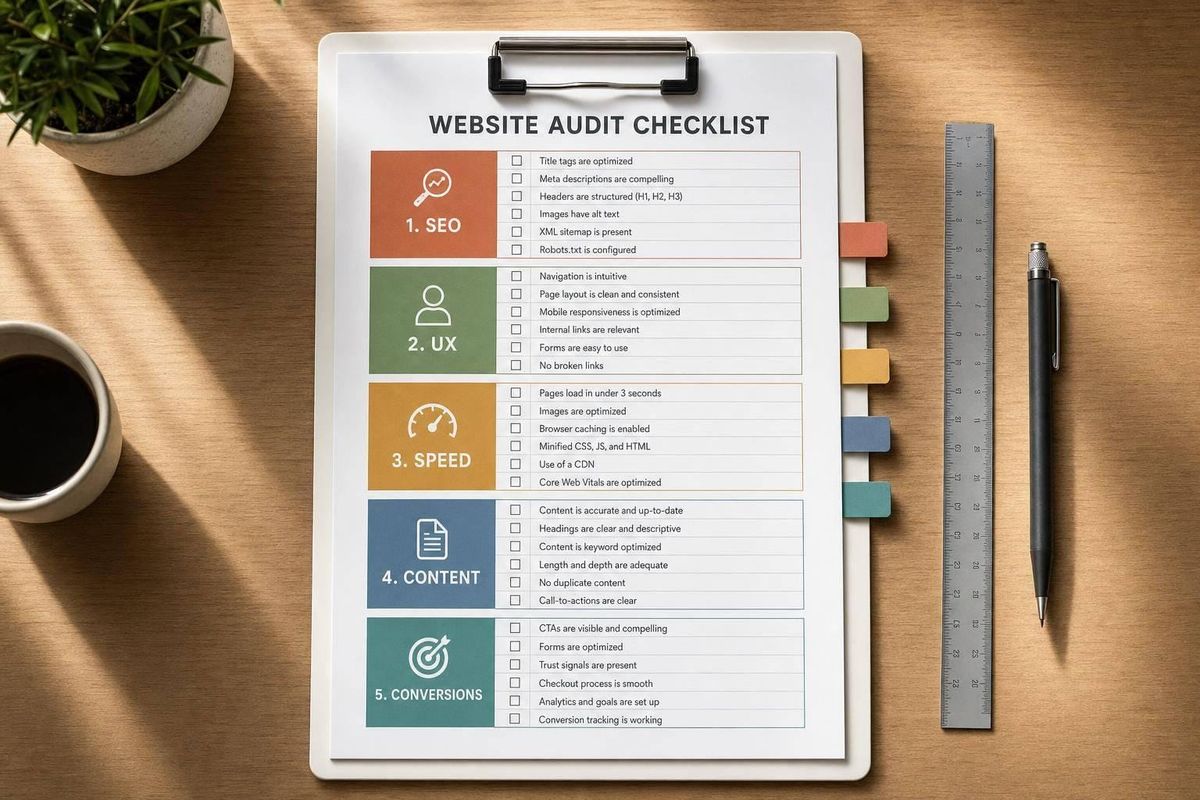
Build a Smarter Website Review Process
A website audit checklist is most useful when it reflects the kind of site you're actually working on. A local business website doesn't need the same review flow as a SaaS homepage, and an ecommerce store has very different priorities than a personal portfolio. That's why a tailored checklist can save time and make the audit process far more practical.
What This Tool Helps You Review
This tool creates a structured plan for reviewing the essentials: technical setup, crawlability, on-page SEO, content quality, mobile usability, accessibility basics, site speed, navigation, analytics, and conversion elements. If you already know where things feel off, you can add those concerns and turn them into a focused review section.
Why a Tailored Audit Checklist Matters
A generic site review template often buries the most important checks. A stronger website audit checklist brings the highest-priority items to the top, so you can start with what has the biggest impact. That might mean indexing checks for a publisher, trust signals for a service business, or performance and checkout friction for ecommerce.
A Practical Starting Point for Better Decisions
Use this tool when you want a cleaner way to plan a site review, spot gaps, and organize next steps. It's a simple way to build a custom site audit checklist without overcomplicating the process.
FAQs
Does this tool actually analyze or crawl my website?
No—it generates a tailored audit checklist based on the details you provide. That means it doesn't pretend to inspect your site or return made-up scores. Instead, it helps you review the right areas in a structured way, which is often the best first step before a deeper manual audit or technical review.
Who is this website audit checklist tool best for?
It's useful for marketers, business owners, SEO specialists, designers, developers, and content teams. If you need a practical way to audit a business site, blog, ecommerce store, SaaS site, portfolio, or local business website, this tool can give you a checklist that fits the site's purpose and audience rather than a one-size-fits-all list.
How is the checklist tailored to my inputs?
The tool uses your website type, goals, focus area, experience level, and known issues to decide what to prioritize. For example, an ecommerce site may get stronger emphasis on product pages, trust signals, and conversion paths, while a publisher site may surface content structure, indexing, and ad or performance concerns earlier in the checklist. If you choose beginner mode, the language stays plain and explanatory; advanced mode uses tighter technical wording.